
BOOK REVIEWS
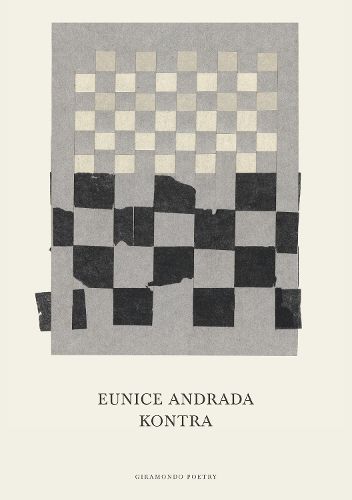
Unconsenting to allegory: Jocasta Suzanne reviews Eunice Andrada and Amy Crutchfield
Allegory demands perfection of itself – the relation between A and B has to be airtight to function. Insofar as it can only be perfect as mediated through our lives, allegory demands perfection from us as well. It would make sense, then, that in a period of breakdown allegory becomes stressed, intensified to a pitch of delirious, panicky rage; it collapses in on its own perfection, black-hole style.
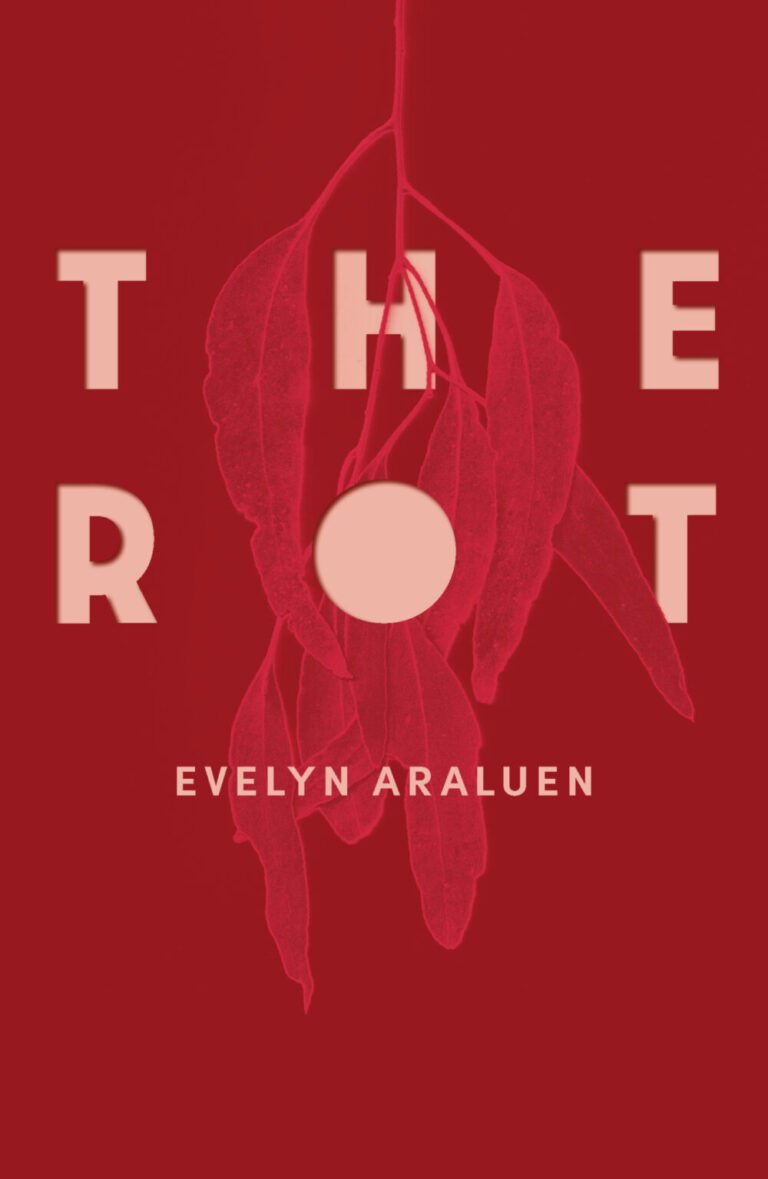
Rot cycle – the long future: Jeanine Leane reviews Evelyn Araluen
The Rot is the second collection by Bunjalung poet and scholar Evelyn Araluen. While similarities to Araluen’s earlier award-winning work Dropbear are apparent in style, language, and positionality, The Rot grows out of a different socio-cultural context and a different set of material conditions. Both works though, are radical for what they confront – ‘stare back at’ and refuse to look away from. And for what they refuse to allow to defeat them.
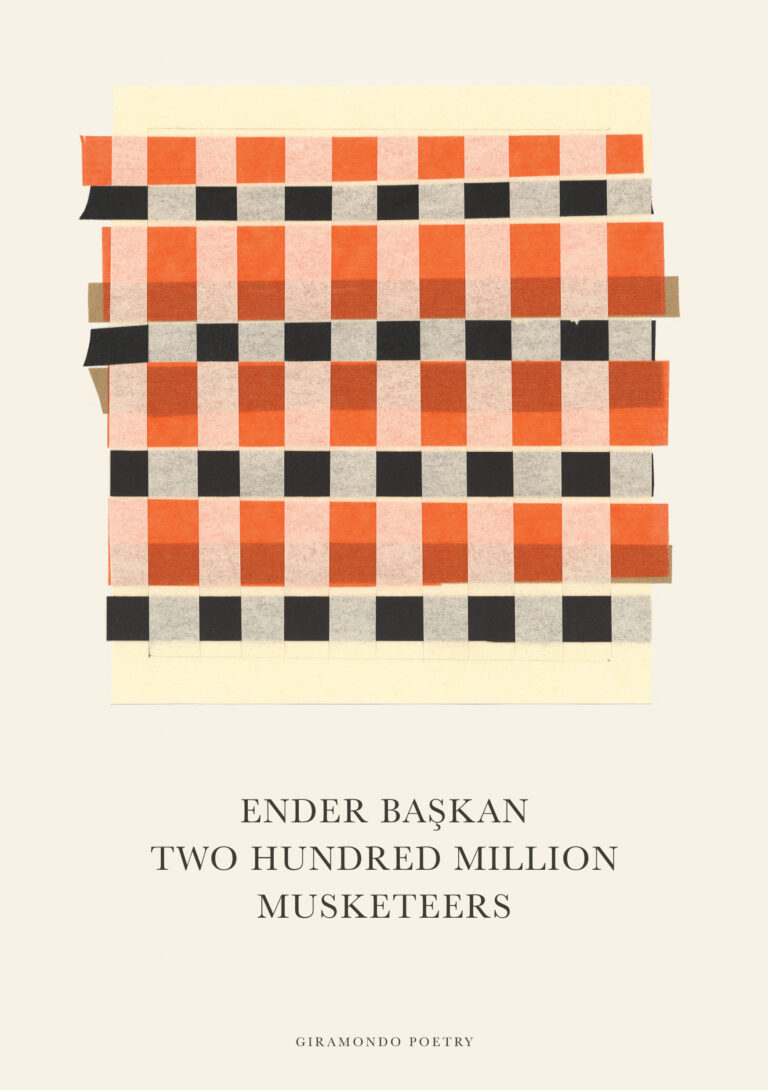
Rawdogging the system: Declan Fry reviews Ender Başkan’s Two Hundred Million Musketeers
Ender risks the rawdog. To capture things in mid-flight. It keeps him hungry. Keeps you honest.
What draws Ender to this? Ask Sophia, his partner. She’s 80% rawdog. As in, will “PERFORM ANY ACT RECKLESSLY / OR WITHOUT PREPARATION.” As in: “A MEASURE OF RISK TAKING” (‘Hot Water’, 39).
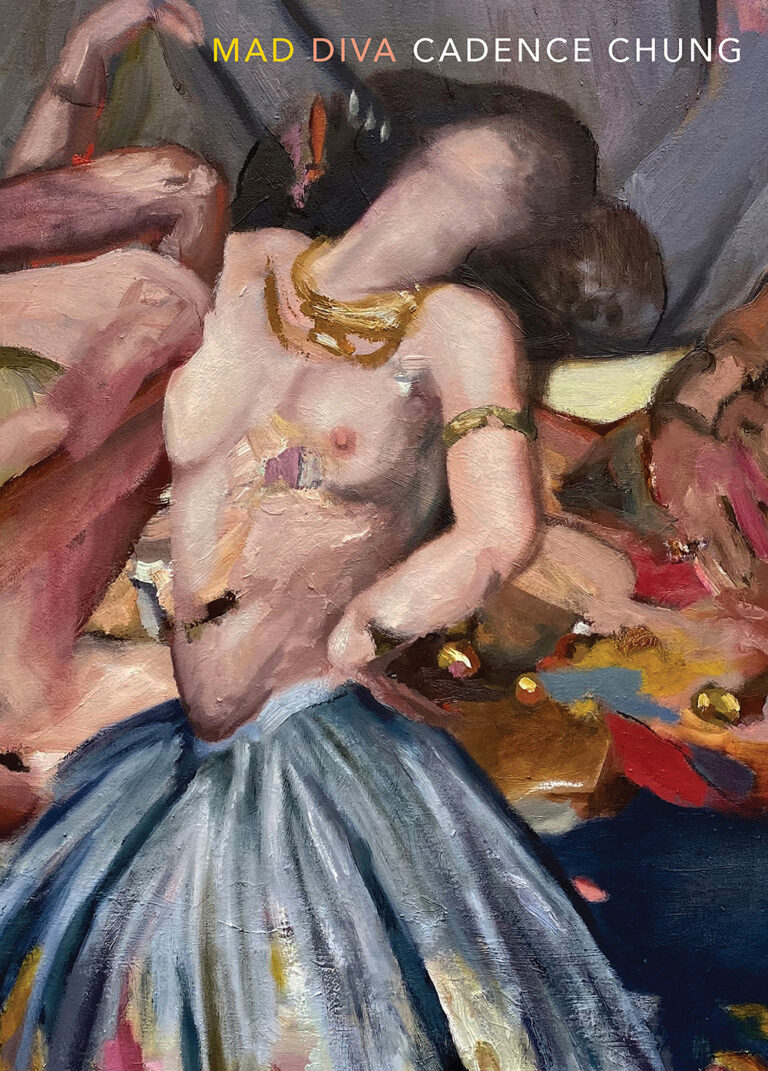
Review short: Cadence Chung’s Mad Diva
My mother once said, “You have too many desires. If you had fewer desires, you’d be happier.” I wish that I then had Cadence Chung’s retort: “easy to blame desire easy to blame it on the want the wanton of a woman” (15). Breathlessly dispensing with punctuation, these words appear in a poem titled ‘Desio’, early in Chung’s sophomore collection, Mad Diva.
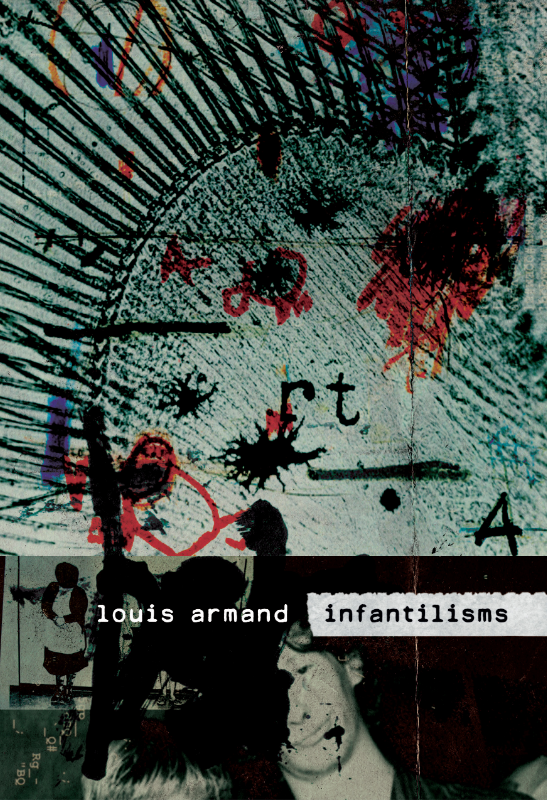
Angela Meyer reviews Louis Armand and Sarah Temporal
Louis Armand’s Infantilisms and Sarah Temporal’s Tight Bindings (both Puncher & Wattmann, 2024) are disparate collections which overlap in their ability to make the parts speak for the whole. Armand’s, in a resistant, disjointed way — allowing the reader to locate cultural, social, historical webs and associated meanings, or just stray off onto rich tangents of their own. In Temporal’s, we’re more gently guided, with its through lines of fairytale, nature (in its various forms), the body, birth, and concepts of girl, daughter, mother, woman.
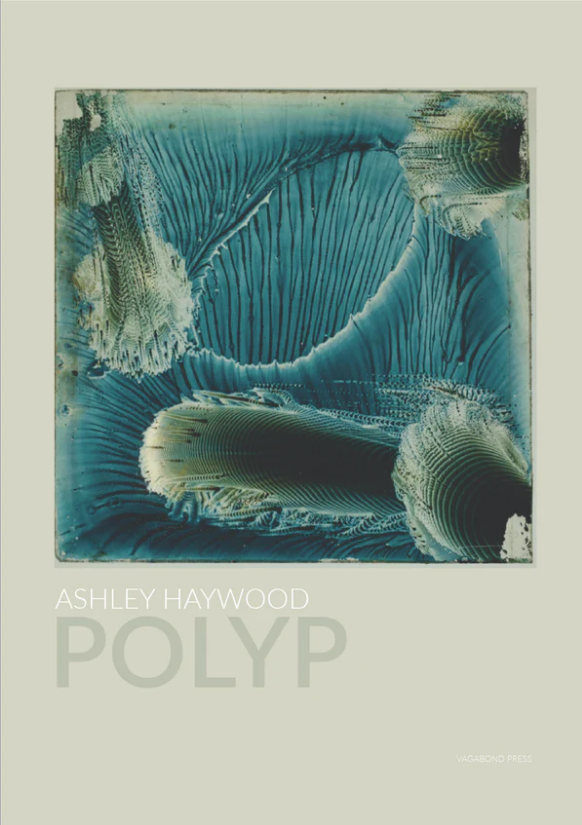
Nicole Rain Sellers Reviews Ashley Haywood and Brett Cross
Clustering is a technique for mind-mapping the parts of any whole. Organisms cluster into ecologies, people cluster into communities, and poems cluster into collections. In Polyp and Islands, clusters of cells, beings, and places form and dissolve. Both books explore the flux between separateness and wholeness in nature, each word and line branching into vaster topographies. The poems arrange in organic patterns, then undermine their own classification by splitting, mixing, and rejoining themselves in new arrangements.
Jenny Hedley Reviews Peter Rose and Sholto Buck
A tiny bag of crystal shard, almost empty, is tucked into Peter Rose’s Rattus Rattus (2005), presumably by its previous St Kilda Library–associated borrower. I am tempted to sample the remnants in order to conjure a different version of (my) critical self — the excuse being that I proposed reviewing Rose’s latest poetry volume Attention, Please! alongside Sholto Buck’s debut In the Printed Version of Heaven through a lens of performative selves. I move the bag from pages to table and back again, entertaining and then shelving temptation, unsure whose impulse will win out: the addictive personality of yore or this stable, routine, maternal self.
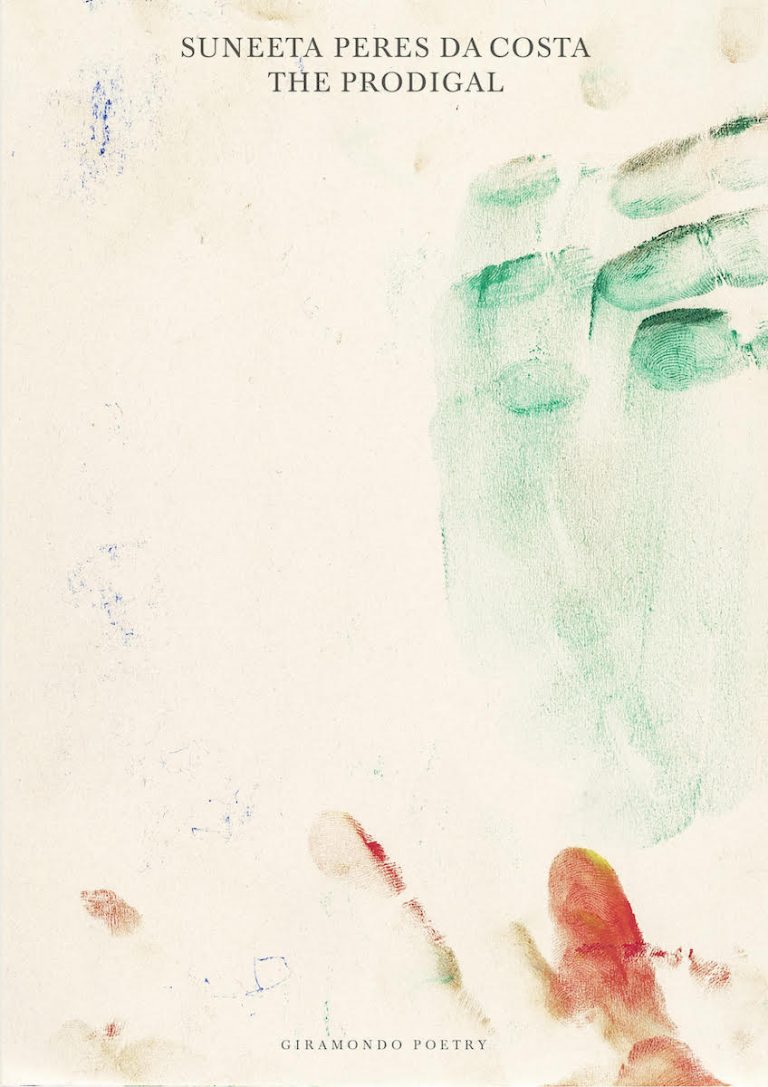
Kameron Lai Reviews Suneeta Peres da Costa and Šime Knežević
While I am hesitant to pathologise the diasporic experience (it is indeed a site of joy!), the effects of displacement often feel proximate to malady. I am always cautious to frame diaspora in such ways – it would not be genuine of me to pretend as if it were always a joyful experience, or something that I have never felt ashamed about. And there is guilt in that shame. Suneeta Peres da Costa’s The Prodigal (2024) and Šime Knežević’s In Your Dreams (2025) stoke the fever in my heart that aches and involuntarily turns to ugly feelings, pleated over and over as I make sense of my place in relation to contemporary Australia and my ancestral homelands.
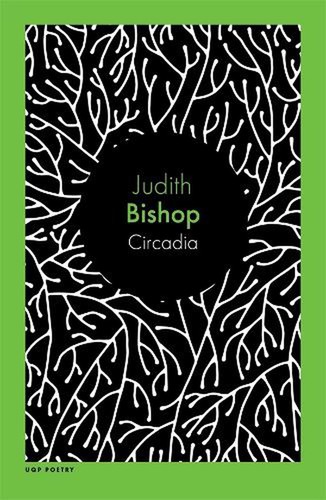
Bonny Cassidy Reviews Judith Bishop and Jeanine Leane
The circadian rhythm is homo sapiens’ response to Earth’s orbit of the Sun. A top-down process instigated by neurotransmitters, it trips the nervous system, hormones, circulation, and muscles to rise with sunlight and sleep with darkness. The sleep part of the rhythm is not truly unconsciousness, rather, it’s a descent and ascent through gradations of brain wave frequencies.

Jennifer Compton Reviews Esther Ottaway and Diane Fahey
Puncher & Wattmann, whose present proprietors are David Musgrave and Ed Wright, has, since 2005, brought forth over 200 titles, many of them of the poetry ilk. On the ABOUT page of their website, the press proudly avers that they are a publisher of “shit-hot writing.” As far as I can recall, this has been their guiding principle since inception. I am kind of tickled by this appropriation of the vernacular. Because shit is hot.
Cher Tan Reviews Hasib Hourani and Manisha Anjali
Naag Mountain by Manisha Anjali Giramondo, 2024 rock flight by Hasib Hourani Giramondo, 2024 Alas! There is no one in hell … all the devils are here! – Aimé Césaire, A Tempest (trans. Richard Miller) Who are you without colonialism? …
Situated Song, Motherhood and Creativity: Ann Vickery Reviews Kate Fagan and Tais Rose Wae
Song in the Grass by Kate Fagan Giramondo, 2024 Riverbed Sky Songs by Tais Rose Wae Vagabond Press, 2023 Both Kate Fagan’s Song in the Grass (Giramondo, 2024) and Tais Rose Wae’s Riverbed Sky Songs (Vagabond Press, 2023) take motherhood …

Samuel J. Cox Reviews Toby Fitch and Gareth Sion Jenkins
Toby Fitch’s Object Permanence: Calligrammes (Puncher & Wattmann, 2023) and Gareth Sion Jenkins’ The Inclination Compass (Puncher & Wattmann, 2023) both represent not only the culmination of large bodies of work, but also can be considered avant-garde in their experimentation with the boundaries of poetry as a visual medium.
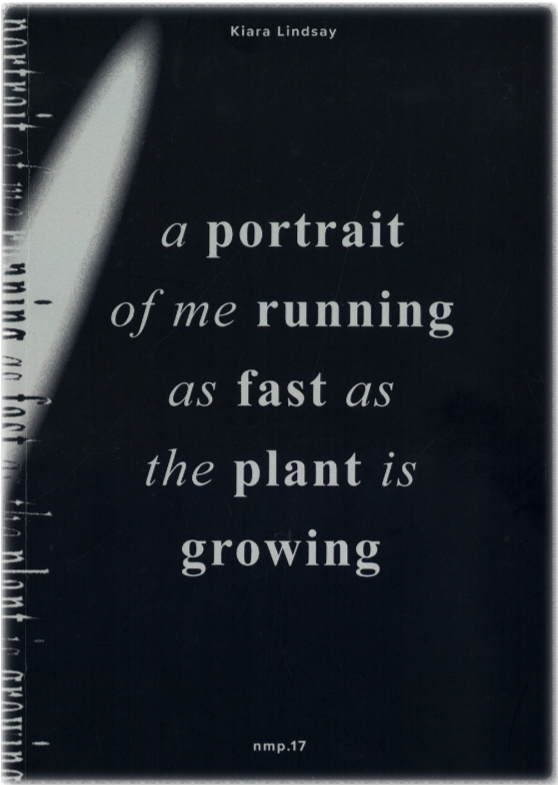
Ash Davida Jane Reviews Kiara Lindsay and Robyn Maree Pickens
Robyn Maree Pickens’ debut collection Tung (Otago University Press, 2023) joins a growing school of contemporary ecopoetics within Aotearoa New Zealand. Recently awarded third place for the international Laurel Prize for “the best collection of nature or environmental poetry,” Tung is deeply concerned with the non-human world and new, or perhaps very old, ways of being.
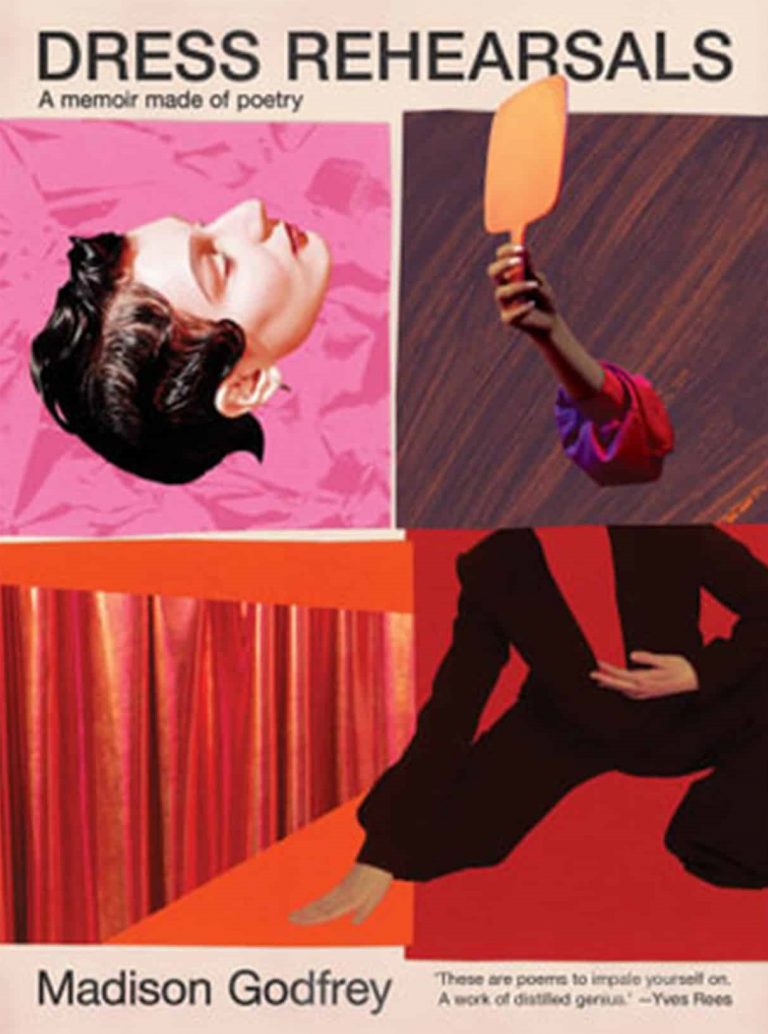
Tim Loveday Reviews Madison Godfrey and Caitlin Farrugia
Madison Godfrey’s 2023 collection of poetry is, as the cover and title imply, like staring into a mirror to find only the arm that holds it up – a dress rehearsal for a made-self that is trying to find its way towards an exciting and liberated life in a cis-gendered, heteronormative world.
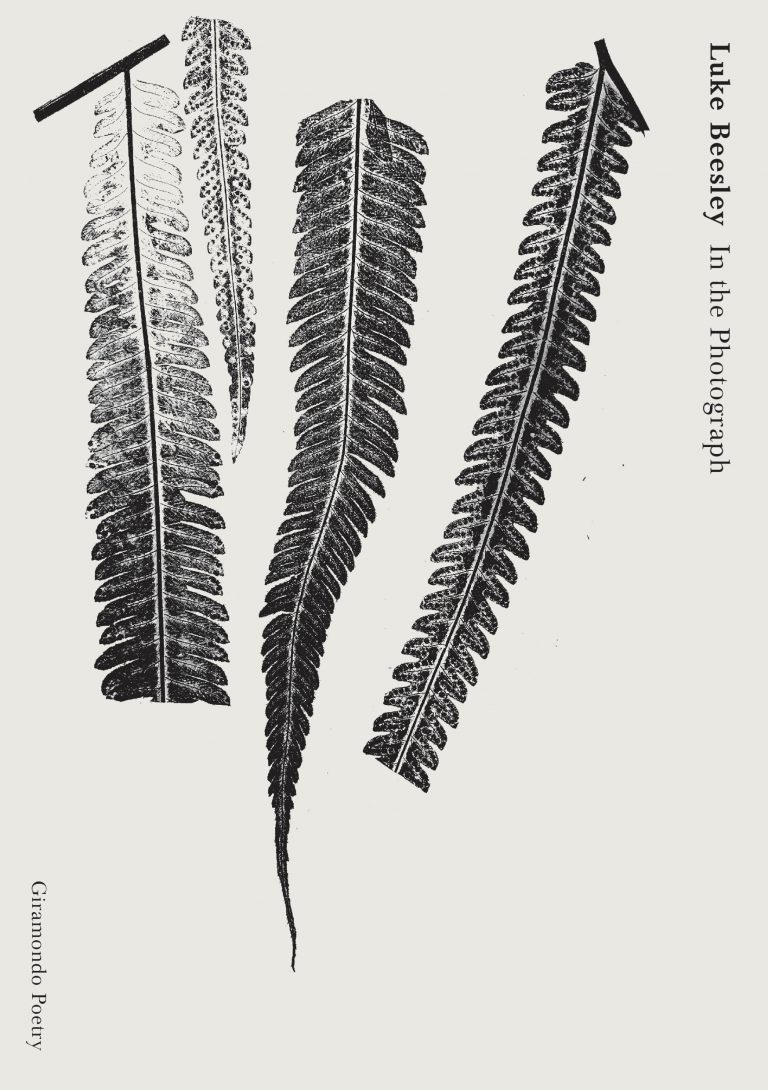
D. Perez-McVie Reviews Luke Beesley and Caroline Williamson
We were all children once, but some of us more than others. In the Photograph (Giramondo Publishing, 2023) is Luke Beesley’s sixth book of poetry. Time Machines (Vagabond Press, 2023) is Caroline Williamson’s first collection. Children are central to both books. The speaker has a son in lots of Beesley’s poems, and Williamson’s has at least one kid present, too. The poets themselves were children once.
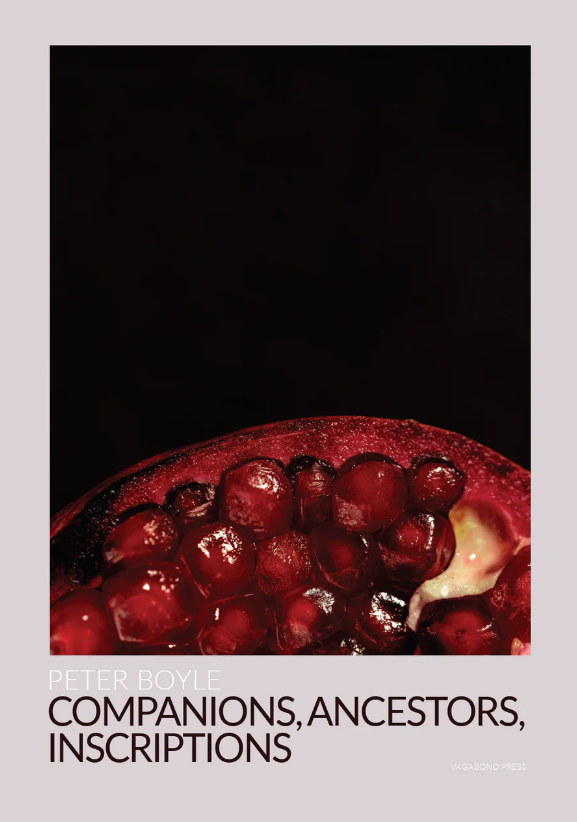
Jennifer Compton Reviews Peter Boyle and Izzy Roberts-Orr
First, I salute Vagabond Press – its progenitors, its long-time toilers in the vineyard of poetry, its patrons, its cheer squad, and those who work in the shadows. Any small press, surely, is a hub of more-or-less willing volunteers. It is very expensive, in all sorts of ways, to make a book. Count the cost. But year after year after year, since 1999, Vagabond Press has been turning aside from the multifarious, ever-present griefs of the world, and privileging poetry.
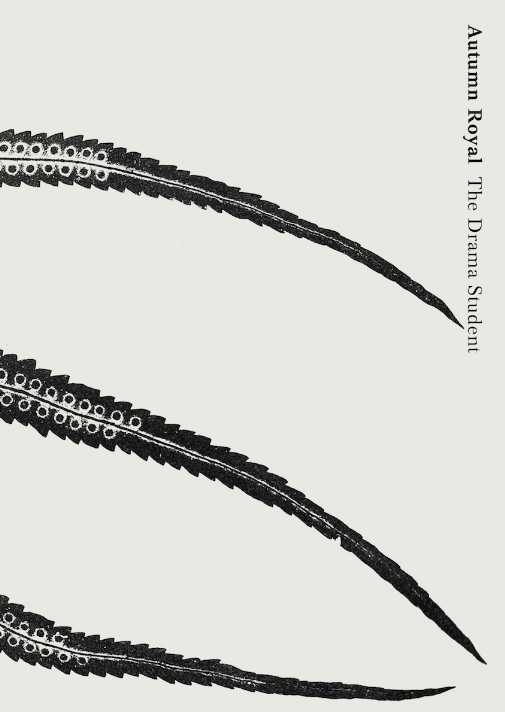
Panda Wong Reviews Autumn Royal and Barbara Temperton
Like reverse-engineering a sausage, articulating grief is an impossible task. Autumn Royal’s debut poetry collection The Drama Student (2023) resists this urge for clarity. Instead, she writes towards grief’s inability to be expressed or written, how language scrapes against grief’s edges, a continuation of her practice’s focus on elegy and mourning traditions.

Sam Ryan Reviews Mitchell Welch and William Fox
Definitions of fiction and non-fiction are slippery. Each contains elements of the other; fiction can be based in non-fiction and non-fiction can include elements of fiction. Reportage, a non-fiction genre which is, by definition, based in truth still contains moments of fiction – not everything you see on the news is true.
Dior Sutherland Reviews Claire Miranda Roberts and Stephanie Powell
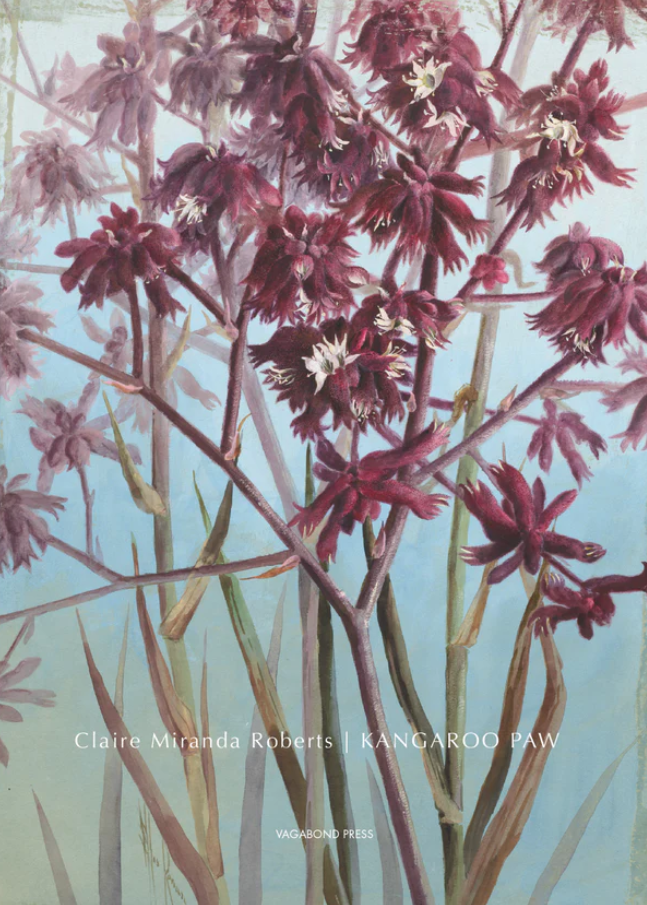
Two paths unfold. The first, a cut through a mathematically precise study where landscape meets self, transposed over the growth patterns of flora. The second, an expansive suburban saunter through a treatment of identity and memory of place, plotted cartographically. These pathways have names: Claire Miranda Roberts’ Kangaroo Paw; Stephanie Powell’s Gentle Creatures.
Toby Fitch Reviews Catherine Vidler
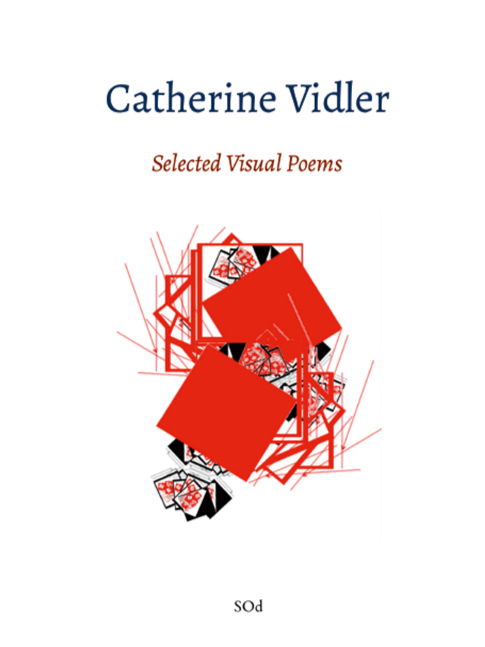
In the late Catherine Vidler’s first full-length collection of poetry Furious Triangle (2011), a brilliant book of poems using regular old words, the spores to Vidler’s entirely wordless visual poems can be found. There are experiments in the microscopic, such as through anagrammatic play and her ‘20 one-word poems,’ the latter of which highlights the contradictory and proliferative meanings within single words.

Will Druce Reviews Jake Goetz and Michael Farrell
Saturated in a droll but kind and sparkly ennui, Jake Goetz’s volume, Unplanned Encounters (2023) reaches out a cigarette-butt holding, soil and spider-web covered hand and invites readers to confront dislocation, catastrophe, doom, ecocide, and the deeply unsettling mutilations/morphology of post-colonial settlement.
HYPERTHYROIDISM: Lucy Van Reviews Shastra Deo and Dominic Symes
I spent much of 2023 inadvertently giving Shastra Deo’s The Exclusion Zone the silent treatment. I felt, for reasons now irrelevant, consigned to my own bathetic exclusion zone, as if the book were a forbidden, inaccessible text. So exclusive: as if to read The Exclusion Zone would be in violation of the text’s manifest function.
The Overview Effect: Nicola Williams Reviews Paul Munden and Peter Bakowski
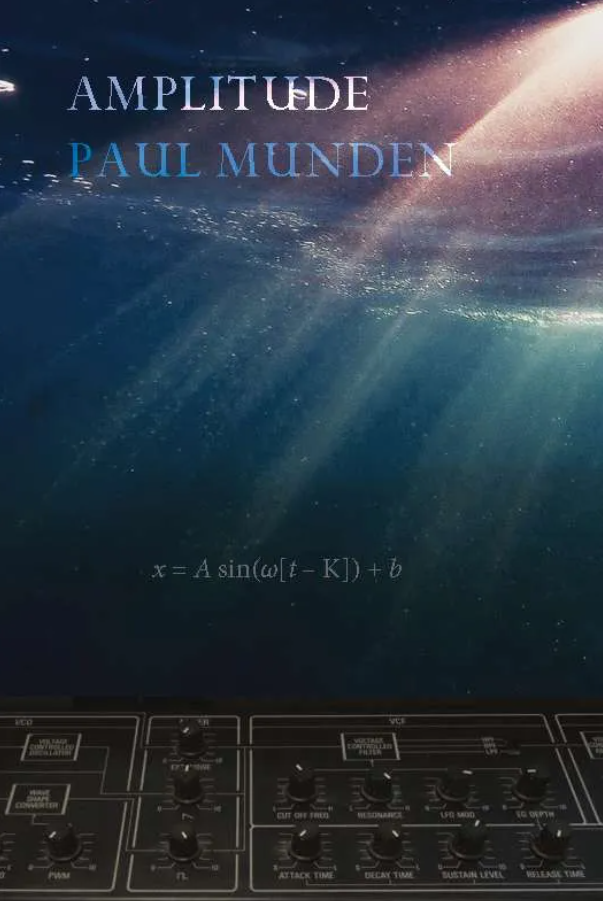
In the music library at the Barbican Centre in London, the walls are lined with symphonies and sonatas, rigoletti and reference books for jazz and opera. Two men gossip about a composer. A man wearing headphones is silently learning the piano. His teacher, a woman with a grey bob, sits next to him at the electric keyboard and nods.







